
Textual Analysis of Aristotle’s Ethics Paper
By Olivia Standish, October 2022, Classical Political Thought.
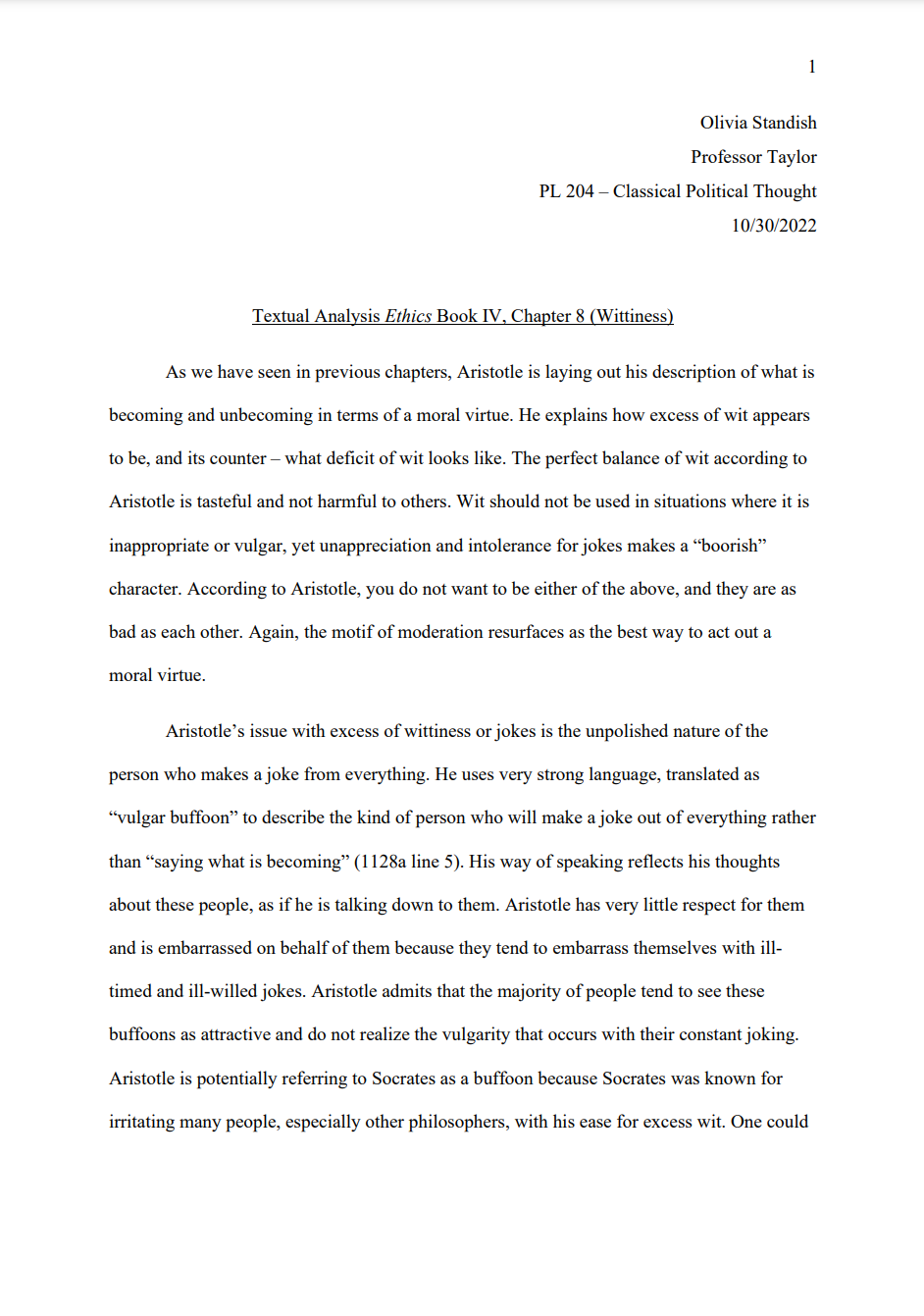
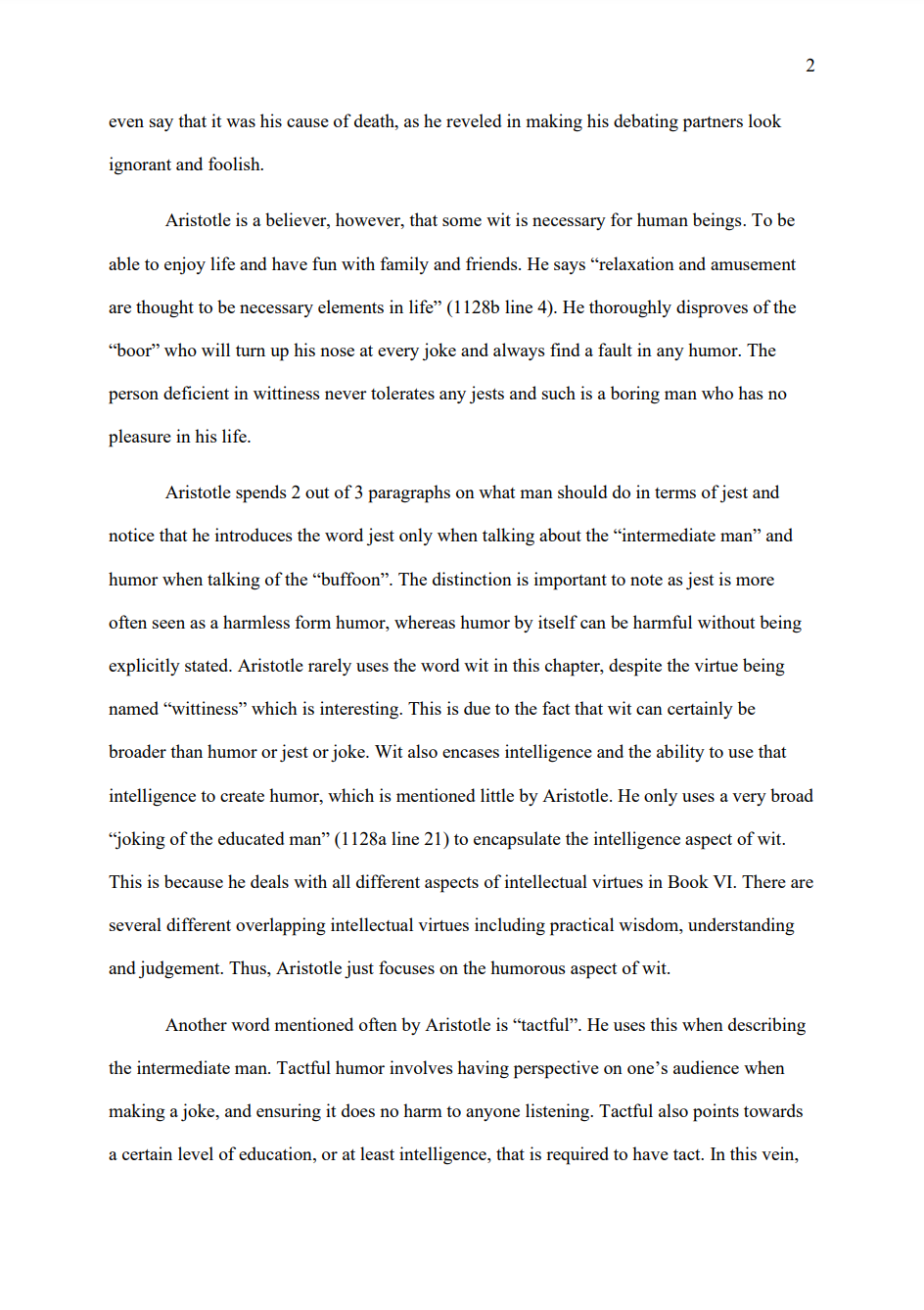
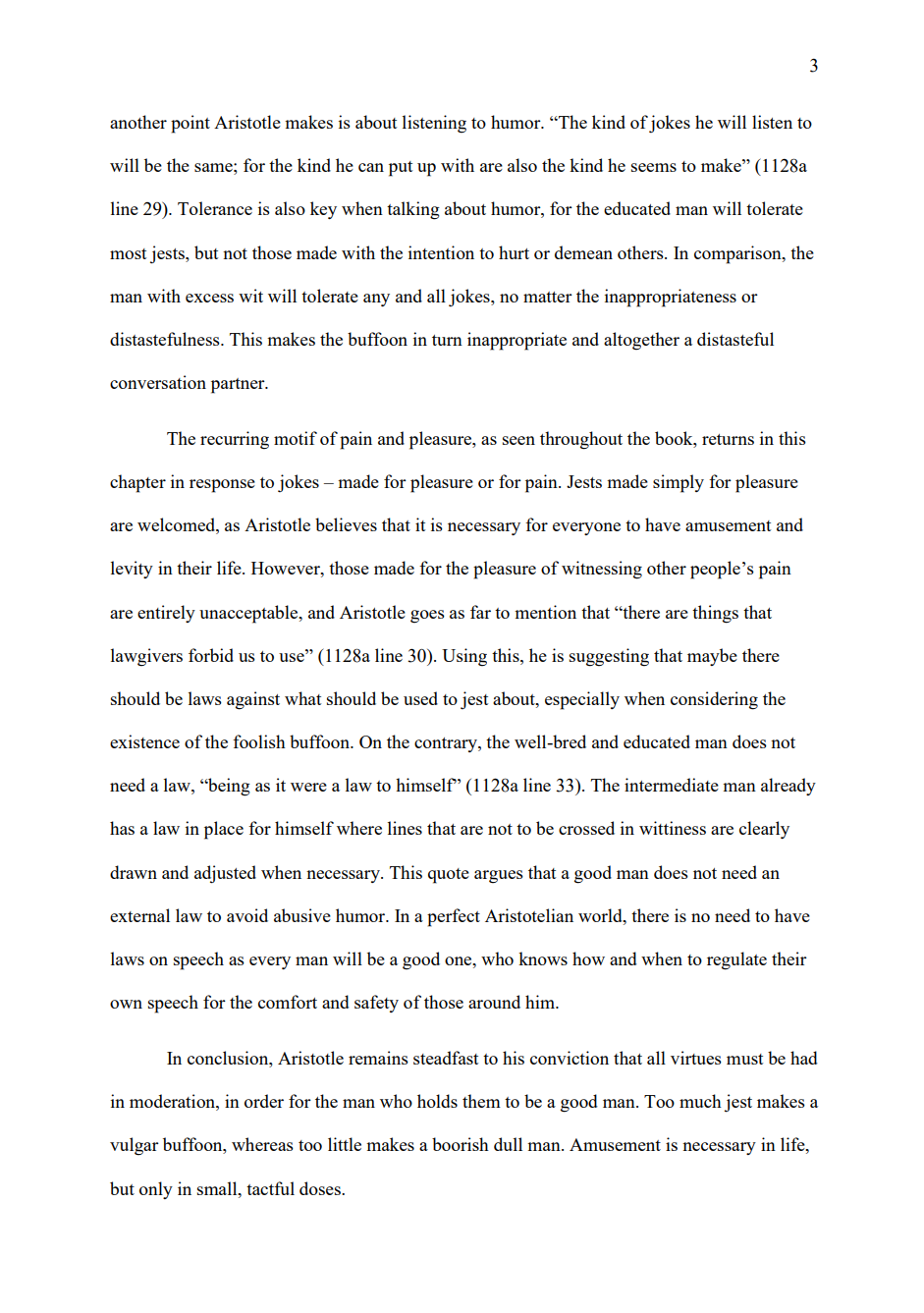
The learning goals and literacies this assignment addresses are:
- Read Greek and Latin prose and poetry within their larger cultural and historical settings.
- Read critically and analyze closely literary texts and modern scholarship.
- Interpret visual materials in isolation and in their original context.
- Develop the skills to conduct a close readings of original Greek or Latin texts.
This assignment was a recurring assignment of a close textual analysis of a certain chapter of Aristotle’s Nicomachean Ethics in the class Classical Political Thought. This specific assignment is analyzing Book IV, Chapter 8 on Wittiness. I learned to do close contextual analysis of a classical literary text from a political, ethical and theological perspective. I then presented to the rest of the class what I had observed and interpreted from this chapter.
I think this was a successful item as this was a new experience for me in my Classics career. I get into specific words as they were translated, what Aristotle references in conjunction with wittiness and his ideal moderation of the virtue wittiness.
This assignment furthered my view of Classics as an interdisciplinary subject capable of viewing through many different lenses.
If I could redo this assignment, I might focus a bit more on how wittiness fits into the other virtues, not just how it fits into the intelligence virtue.
The PDF version of Textual Analysis of ‘Wittiness’ in Aristotle’s Nicomachean Ethics is linked here for ease of reading.