


Olivia Standish
I am a Mathematics Major with a double Minor in Classics and Dance from Skidmore College.

Third Sylow Theorem Proof
This group project was a result of my Abstract Algebra I class. The project contains a LaTeX Report outlining our proof for the Third Sylow Theorem, and a Python code that explores an inputted group G‘s subsequent p-Sylow groups.

Imperial Rome and Slavery Paper
This paper “How did the treatment of slaves change during the Roman imperial period, and at the introduction of Christianity as the imperial religion?” discusses the intersection of religion with slavery legislation and attitudes during the Roman Imperial Period.
Romans and Their Environment Project
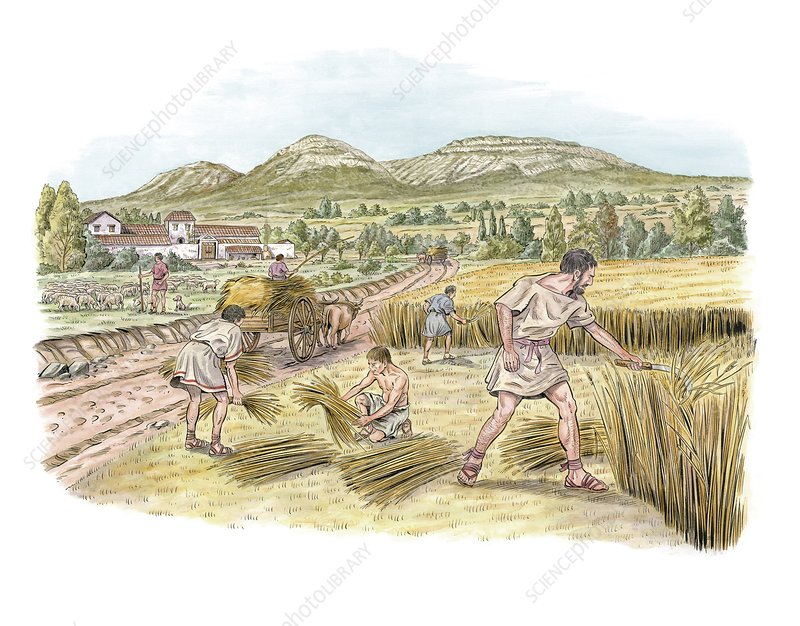
This project was a creative endeavor for an interdisciplinary class involving a historically accurate Roman town made in Minecraft. This project was to make literary evidence that a Roman farmer would’ve left behind. It involves a creative writing piece on the family’s history and a family tree.
Femininity in Virgil’s Aeneid Paper
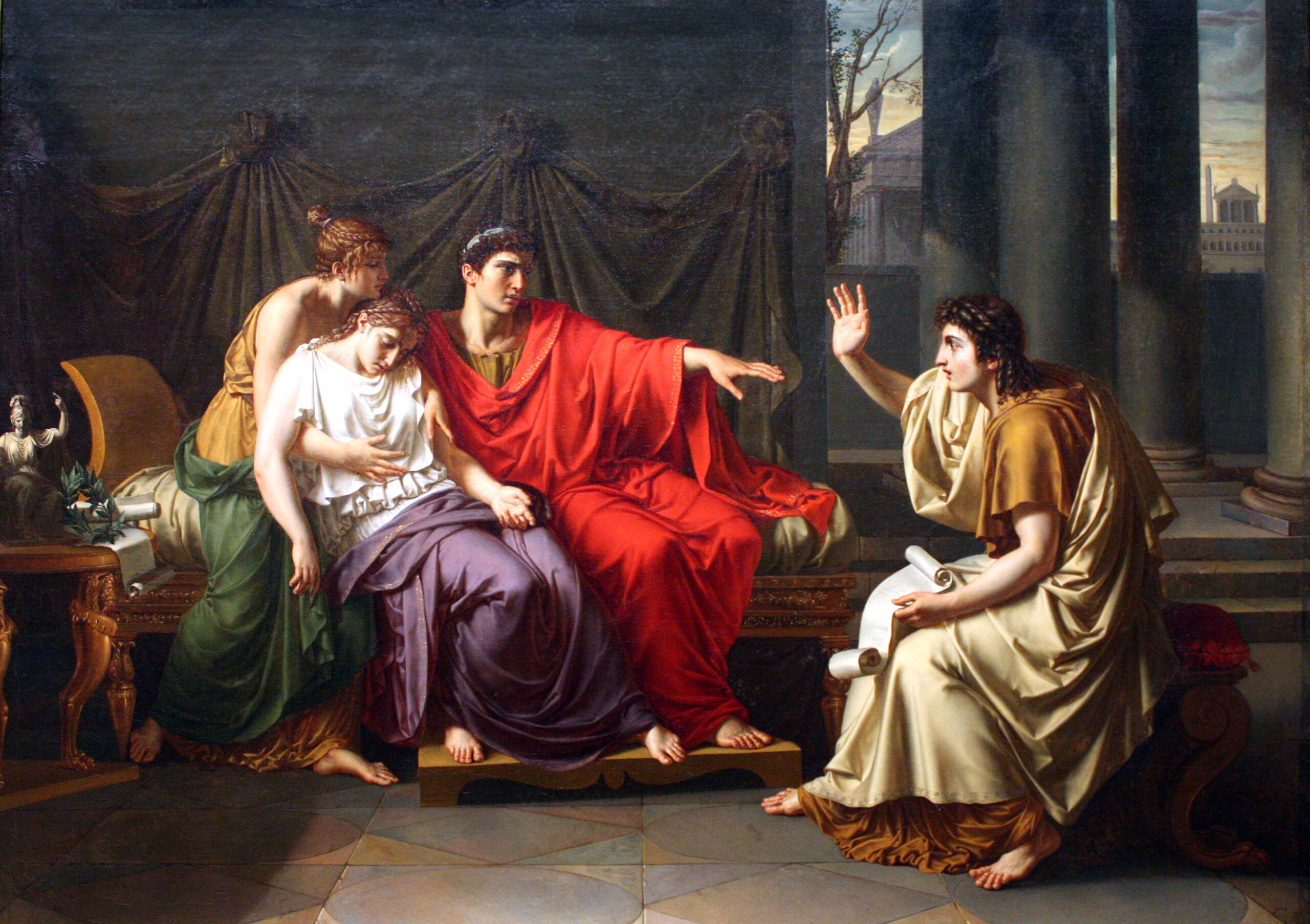
This paper is an annotated bibliography containing secondary sources relating to the role femininity plays in Virgil’s Aeneid. This was the final paper of the Latin Poetry: Virgil class. The sources range from discussing the famous Dido and Camilla to the unnamed female characters in the epic poem.
Friendship in Aristotle’s Nicomachean Ethics Paper
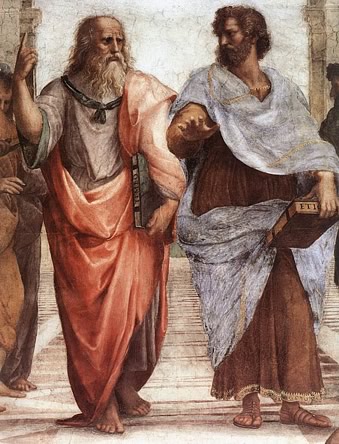
This paper evaluates Aristotle’s treatment of friendship in his Nicomachean Ethics. It also analyzes the importance and relevance of friendship in a discussion on human excellence, happiness and virtue. This was the final paper in an interdisciplinary class, Classical Political Thought.
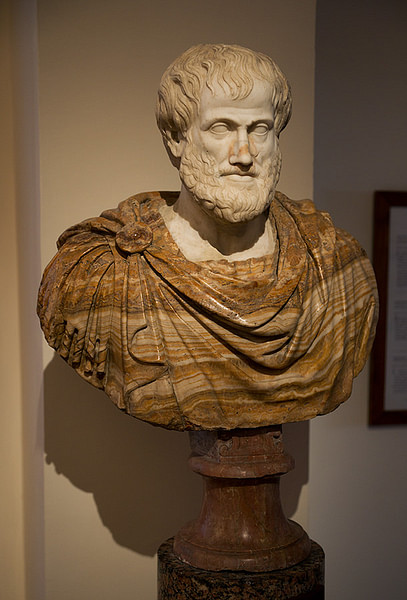
Textual Analysis of Aristotle’s Nicomachean Ethics Paper
This paper analyzes Book IV, Chapter 8 of Aristotle’s Nicomachean Ethics which is focused on the virtue of ‘wittiness’. This is a close analysis of the chapter and a discussion of Aristotle’s intentions behind his directions of being moderately witty.

Tango Magazine Project
A group project in a magazine format discussing the origins of tango, it’s international journey and modern adaptations to the form. My part involves discussion of tango music, how tango changed when it travelled to Britain and how it moved to and changed in the US and Japan.
Final Reflection:
This portfolio greatly exemplifies my Skidmore career. Both my minors, Classics and Dance, have contributed to my education and my experience at Skidmore. My major, Mathematics has less group projects and papers that I could share in a portfolio, so I relied heavily not only on my minors, but other classes relating to the Classics minor that interested me. This is a testament to my interest in Classics outside of what is required of me for the minor. I have taken, as evidenced in my portfolio, Classical Political Thought, which was technically a politics class. I found that these additional classes added to my understanding of Classics as a complex intersection of many different disciplines.
The portfolio showcases a range of items that together illustrate the breadth and depth of my Classics studies. Each piece reflects key themes and skills, as well as my own academic development. For instance, my Role of Femininity in Virgil’s Aeneid paper showcases the start of my academic journey. The assignment was just to do the annotated bibliography for a hypothetical paper. I felt that I could’ve had a better process for selecting my sources as I only used JSTOR to find sources. I learnt from this assignment and now I utilize all the different databases available to me through the Skidmore library’s website.
Other Classics pieces, such as my creative endeavors in Romans and Their Environment or my political analysis of Aristotle’s Nicomachean Ethics highlight the interdisciplinary nature of Classics and its capacity to illuminate modern questions. Through these pieces of work, I learned to approach ancient texts as culturally relevant materials that can be reflective upon modern times and ideals. The connection of antiquity with contemporary issues and an appreciation for the multiplicity of perspectives embedded in Classical studies is incredibly important.
Furthermore, my Mathematics project showcases my technical coding skills and was the first example of me combining my analytical logic with writing skills to capably convey my thoughts. I found that this expanded my view of Mathematics in the academic world. Being not just able to do math, but be able to communicate it effectively is an entirely different skill that I worked to use.
When approaching this portfolio assignment, I started by reflecting on what I wanted to communicate about my experiences at Skidmore. I wanted this portfolio to show not just my academic accomplishments but also of my evolving career as a student. To achieve this, I reviewed my work from across all semesters, looking for assignments that not only showed my successful assignments but also marked key moments of growth.
Once I had selected the items, I thought carefully about how they could be contextualized to highlight their significance. I included reflective annotations for each piece, discussing not only the content and process but also what I learned from them. By providing these reflections, I hoped to communicate to readers my thought process and to make the portfolio more than just a collection of finished products, but an insight into my educational journey.
I arranged my portfolio items into 3 different categories based on the subject. I thought that the 3 subjects had very distinct learning goals and learning styles and therefore needed to be separated to display my skills effectively. It wouldn’t have made sense to put them all in the same section, and I wanted to present my range of academic interests and the progress I’ve made in each of them.
There are a few things I believe readers need to know about this portfolio. While the assignments included represent some of my work I’m proud of, they are also indicative of my learning process. Each piece reflects not only my knowledge but also the challenges I faced and the progress I made. I hope readers will see this portfolio not as isolated achievements but as part of a larger narrative of growth and exploration. There are many unique avenues of Classics to explore, and I felt that I utilized Skidmore’s Classics curriculum to the fullest. I have taken various linguistics, political theory, philosophy and literature classes that have all contributed to my broader view of Classics as incredibly relevant to contemporary issues.
I hope that readers of this portfolio can take away from my experience of Classics for themselves. Classics is relatable through ancient poetry and prose about love, comedy and tragedy. The linguistic roots from Latin can be traced to modern English. Questions of power, justice, economics and philosophy are consistently brought up today. Patterns of ancient history can help us understand more modern history and the movement of current events. Through this portfolio, I hope to share the conversation of Classics and inspire others to look at how Classics can impact their own lives.
Olivia E. Standish